- We are ready to help. Call Us!
 03 9738 2000
- Get in Touch
03 9738 2000Maroondah Electrical is dedicated to expanding our service coverage to meet the needs of our customers. Meanwhile check My Sparkie Electrician, a trusted name in the industry, to provide reliable electrical services in Sydney.
Need a quote? Give us your information below and we will get back to you.


A power outage can be seriously disruptive and concerning, especially when it happens out of nowhere. While it usually affects the entire house, there are times when it might only be occurring in one or two rooms.
Sound familiar? If you’ve been wondering why the power keeps going out in only one part of the house, we’re here to help. In this article, we’ll take a look at what this could mean, why it’s occurring, and how to respond.
A lot of times, a power outage won’t originate inside the home. Often, it is actually the result of external factors beyond your control.
From larger power outages to isolated incidents, here’s a look at some of the most common reasons why they happen in Melbourne.
Sometimes, the problem has nothing to do with your property at all. A fault affecting a local section of the electricity network can leave multiple homes or an entire street without power, while larger network failures may affect thousands of customers at once.
If you want to check, head over to the CitiPower website. They have a live outage map that shows any reported outages in your local street, neighbourhood, or general area.
If your neighbours are also without power, checking the outage map is a good first step before assuming there is a problem with your individual electrical system.
Melbourne’s notoriously unpredictable weather can put considerable pressure on the electricity network. Climate change and the effects of patterns such as the upcoming Super El Niño are also making extreme weather events more common.
During an extreme weather event, strong winds, lightning, flooding and fallen trees may all damage power lines or other electrical infrastructure. Severe weather can cause short interruptions as the network responds to faults. If the outage coincides with a major storm, check the local outage information before touching electrical equipment or investigating anything outside.

Melbourne-based electricity distributors regularly carry out maintenance, repairs and upgrades across their networks. Those works sometimes require power to be switched off temporarily.
Planned outages are usually communicated to affected customers via text ahead of time. CitiPower also provides outage notifications with information about planned and unplanned interruptions, including estimated restoration times.
If your power goes off at roughly the time stated in a notification, there may be no fault inside your home at all. The best option is usually to wait for the scheduled work to finish unless you notice a separate electrical problem.
Issues involving infrastructure outside your property may affect your electricity supply. Damage to underground infrastructure, problems with connections or incidents involving other utilities may all have flow-on effects for the electrical network.
Earlier this year, a burst pipe in Melbourne’s CBD left more than 10,000 people without power. The water entered an underground substation, forcing CitiPower to switch off the power for safety reasons.
This example is a good reminder that an electrical outage does not necessarily start with an electrical fault. Damage to nearby infrastructure may sometimes have a major impact on the local power supply.
Vehicles, construction work, animals, vegetation and accidents may all damage electrical infrastructure. A fault on power lines, poles, cabling, or network equipment may interrupt supply to homes in the surrounding area.
Network faults are generally handled by the electricity distributor rather than a residential electrician. If the outage is showing on the distributor’s outage map, or several nearby properties are affected, the network operator is usually the right place to start.
When the rest of your home still has electricity but one section keeps losing power, the cause is more likely to be within your property’s electrical system.
Every electrical circuit has a limit. Plugging several high-demand appliances into the same circuit may push it beyond its intended capacity.
In addition to newer smart devices and chargers, everything from heaters to kettles, microwaves, washing machines, dryers and other high-powered household appliances all draw significant amounts of electricity. If several are operating on the same circuit, the circuit breaker may trip to protect the wiring.
If the power repeatedly cuts out when particular appliances are running together, overload is worth considering.
Old, damaged or incorrectly installed wiring may cause repeated electrical faults. What’s more, any loose connections, damaged insulation and deterioration within wiring can all create problems that cause a circuit breaker to trip.
Electrical faults may become more obvious as a house gets older or as more electrical equipment is added. Flickering lights, burning smells, buzzing sounds, warm power points or frequent trips are all reasons to take the issue seriously.
Do not attempt to inspect or repair wiring yourself. Electrical faults need to be assessed by a licensed electrician.
Sometimes the house wiring is fine and the problem starts with a particular appliance. A damaged appliance may cause a circuit breaker or safety switch to trip as soon as it is switched on or plugged in.
If the outage consistently occurs after you use a particular appliance, unplug it and avoid using it until the cause has been checked. Repeatedly resetting the breaker and reconnecting a faulty appliance is not a safe way to deal with the problem.
Your switchboard contains protective devices designed to disconnect power when they detect certain electrical problems.
A circuit breaker may trip because of an overload or short circuit, while a safety switch may disconnect a circuit when it detects an electrical leakage that could pose a shock risk.
If one breaker or safety switch keeps tripping after being reset, there is likely an underlying problem that needs investigation rather than repeated resetting.
A fault affecting one circuit, room or section of the home’s electrical installation may leave everything else working normally.
For example, you might still have lights and power in the kitchen while the bedrooms lose electricity. That does not necessarily mean the problem is with the appliances in those rooms. The affected areas may share a circuit, switchboard connection or section of wiring that has developed a fault.
An electrician can trace the affected circuit and determine where the problem is occurring.
The best thing to do is stop and work out exactly what has stopped working before assuming there is a power outage.
If a lightbulb has gone out while the rest of the room still has power, the bulb itself might have blown. Similarly, a single appliance that refuses to turn on could have an internal fault, a damaged plug, or faulty cord wiring.
If several lights and power points in the same part of the house have stopped working, the problem is more likely to involve the circuit or switchboard.
A quick check of nearby lights, power points and appliances is a good way to establish the extent of the problem. If an entire section of the home is affected (particularly if the circuit breaker has tripped), an electrical fault is more likely than a simple appliance failure.

Your switchboard is responsible for distributing and protecting the electrical supply throughout your home. Unfortunately, a lot of older switchboards were often designed for far lower levels of household electricity use than we have today. This is one of the reasons why switchboard upgrades have become a key focus for the Victorian government (particularly for rental providers).
These days, our homes rely on computers, multiple chargers, smart devices, security systems, heating and cooling, solar systems and, increasingly, EV charging stations. As a result, a lot of older switchboards tend to struggle with these demands, particularly after renovations or electrical upgrades.
Frequent tripping, outdated protective devices or signs of heat damage are good reasons to have the switchboard inspected. An electrician will be able to identify any faults and determine if an upgrade or other work is required.
Want to learn more? Be sure to check out our recent article on How to Know If Your Switchboard Needs Upgrading.
As we noted earlier, some outages are either planned or beyond your control.
Smaller, isolated outages are different. If the rest of your home has power but one area keeps going off, or a circuit breaker repeatedly trips, an electrician should investigate the problem.
The same applies if you notice burning smells, buzzing from the switchboard, flickering lights, damaged power points, sparks or any other unusual electrical behaviour. Do not keep resetting a switch that repeatedly trips in the hope that the problem will disappear.
At Maroondah Electrical, we’ve been servicing Melbourne’s eastern suburbs for decades. When you’re facing an isolated power outage, simply give us a call and we’ll send a fully licensed electrician to your door as soon as it can be arranged.
Dealing with a power outage? If you need an electrician in Clayton, Frankston, Oakleigh or Ringwood, we’ve always got your back.
As an industry award-winning family-owned business, our service is built on integrity, honesty, and excellent customer support. From lighting and power to switchboards, home automation, and more, we’ll get to the bottom of the issue in no time.
We’re licensed, insured, and accredited with all relevant industry bodies. We also offer regular discounts and take $50 off if we don’t arrive on time!



Your safety switch, also known as a residual current device (RCD), sits in your switchboard and cuts the power almost instantly if it detects a current leak from wiring or an appliance. So when your safety switch keeps tripping and won’t reset, it’s doing its job, but it’s also telling you something is wrong. In […]

Electric vehicles (EVs) are designed to make life simpler and owning a car more affordable. Simply plug in, charge overnight, and wake up to a full battery, and there’s no need to fill up with expensive fuel. However, if you notice that the EV charger keeps tripping the breaker, that convenience quickly turns into frustration. […]
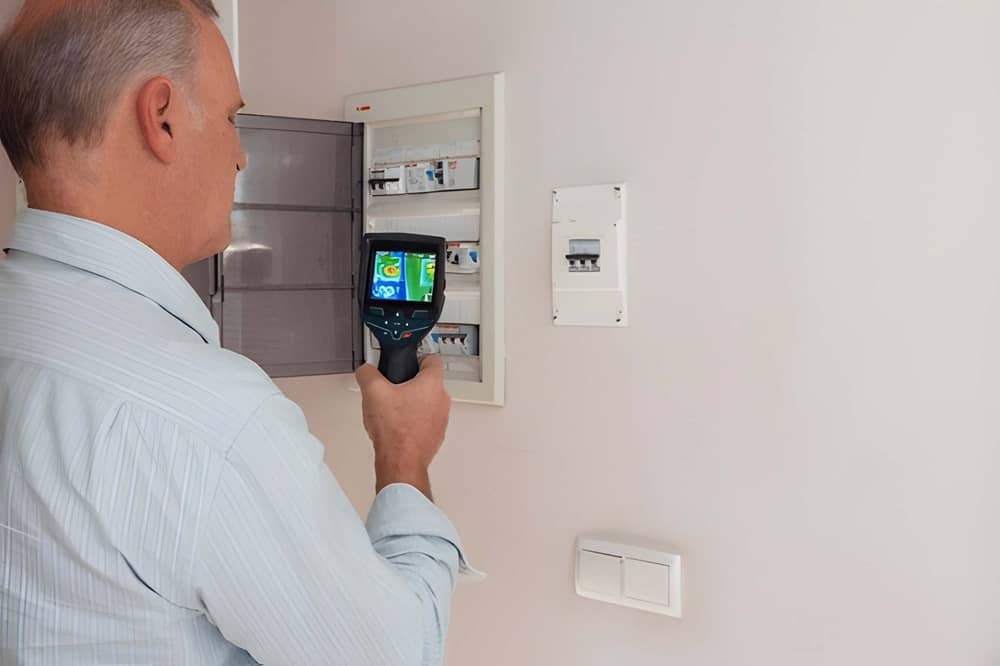
Most of us take electricity for granted. We flip a switch, the lights come on. We turn on the toaster, and breakfast is ready. Because electricity is so integrated into our daily routines, it’s easy to forget that it’s a powerful force that can be dangerous. When something goes wrong, it may be a minor […]
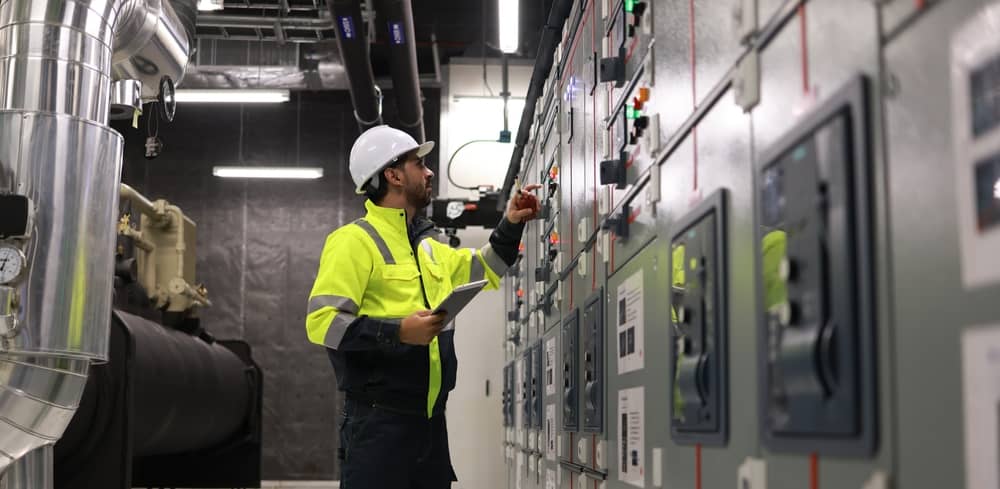
Maintaining a commercial property involves a massive list of responsibilities. From overseeing daily operations to managing sudden issues, the workload is significant. However, the most critical aspect of property management is often hidden behind the walls. Electrical systems are essential to the functioning of any commercial establishment, powering everything from high-end computer servers to basic […]
In order to run a successful business in Melbourne, a consistent and reliable electricity supply is nonnegotiable. As operations grow, you might find that your existing electrical systems are struggling to keep up with the demand of modern technology, heavy machinery, or large-scale climate control. At Maroondah Electrical and Data, we help local business owners […]